
Physical Therapist:
"This Overlooked Muscle Could Be the Real Reason You Still Look Pregnant..."
2/26/2026 - By Emily V. First published at lifted.org

Summary: Discover why popular advice to "skip core exercises" can actually make your postpartum pooch worse and how activating this one forgotten muscle could finally flatten your belly for good.
"I Thought I Was Doing Everything Right..."
After I had my baby, I kept waiting for my belly to go down.
I wasn’t expecting a six-pack, I just wanted to zip up my jeans without feeling like I still looked three months pregnant.
Everyone told me the same thing:
“Just be patient.”
“Don’t do any core exercises yet.”
“Time will fix it.”
So that’s what I did.
I walked. I rested. I focused on bonding with my baby.
And for a while, I believed the pooch would just go away on its own.
But months passed... and nothing changed.
If anything, I started to feel worse.
My back ached.
My posture slouched.
And my belly? Still there.
I tried some pelvic floor exercises I found on YouTube.
I scrolled social posts.
I bookmarked “postpartum‑friendly” routines.
I even tried some gentle yoga poses.
Nothing seemed to work.
If anything, it felt like my stomach was bulging even more.
I was frustrated. Tired. And honestly… I started to feel like my body was no longer mine.
That’s when my physical therapist asked me a question that changed everything.
“You Do Realize That Your Deep Core Is Not Engaging... Right?”

“Has anyone checked if your deep core is actually switching on when you move?”
I blinked.
“My deep core?”
“Yeah. Not the outer abs everyone trains.
The layer underneath, the one most people never think about.
It’s like your body’s built‑in belt.
It should tighten before you lift your baby, stand up, or even drive.”
Then she placed her fingers gently just inside my hip bones.
“Cough for me.”
I coughed. Nothing.
“Now try to pull your belly button back like you’re tightening a corset that no one can see.”
I tried. It felt… quiet. Weak. Uncertain.
She nodded like she expected that answer.
"The problem isn’t with the exercise itself, it’s that your deep core never got switched on after pregnancy."

“Everyone tells postpartum moms to skip core training,” she said.
“But the problem isn’t core exercises.”
I felt my stomach drop more than tighten.
Then she continued:
“People skip core work because they think they’re protecting themselves…
But the truth is the deep core never got switched on after pregnancy.”
I stared at her, trying to absorb it.
All this time, I thought I was doing the safe thing. The right thing.
But skipping core work hadn’t saved me, it had stranded me.
I wasn’t weak. I wasn’t lazy.
My body just never got the memo that it was time to wake up.
And the longer that core stayed disconnected, the more everything else had to overcompensate.
That’s why my back ached.
That’s why my hips tightened.
That’s why every movement felt like a question mark instead of something natural.
I had tried breathing drills, gentle taps, and mindful movements, but nothing felt like it was actually activating anything.
I wasn’t training a muscle… I was guessing at it.
And that’s when she said something that clicked:
“You can’t strengthen a muscle your brain hasn’t reconnected with yet.”

I left that session feeling more seen than I had in months.
But I also felt stuck, like now I knew what was wrong, but still didn’t know how to fix it.
I had done the “safe” stuff.
I had avoided crunches, planks, and anything that felt “too corey.”
Yet here I was, still stuck.
It was like trying to flip a light switch in a room with no power.
And that’s when she pulled something out of the drawer.

"This is the first step most people never try.”
She placed it gently around my waist, just low enough that it hugged the bottom of my belly.
“We’re going to wake up your deep core, not guess at it.”
“These tiny pulses retrain the brain-muscle connection, like physical therapy for your abs.”
She explained that this belt uses tiny electrical impulses, just enough to activate the deep core muscles that had been switched off since pregnancy.
Not to make me sweat.
Not to make me sore.
Just to get the muscle to fire.
It sounded almost too simple.
She turned the device on and I felt a gentle, pulsing sensation deep inside.
“When your deep core starts firing again, your body stops compensating.
Your posture improves.
Your back loosens.
And only then can regular core exercises actually flatten the belly instead of making the bulge worse.”
How EMS Flattened My Belly in Just 60 Days...

Week 1: Little Moments I Almost Missed
By the end of the first week, nothing dramatic had changed.
No “before and after” photo moment, yet.
No sudden strength surge.
Just little things that caught me off guard.
One morning, I bent down to pick up my baby, and halfway up I realized…
I wasn’t holding my breath.
I wasn’t clenching my jaw.
I wasn’t terrified my back would seize.
It was such a small thing, but it stopped me for a second.
Almost like my body whispered, “Hey, I’ve got you.”
Picking up my baby had always felt like a full event.
This time… it just happened.
And I didn’t think twice about it.
Week 2: Movement Stopped Feeling So Hard
Getting out of bed didn’t feel stiff.
Standing to wash bottles no longer made me shift weight every few minutes.
And I wasn’t constantly scanning for pain every time I stood, bent, or picked something up.
I just.... moved.
Something was changing.
Usually, every movement used to come with a mental checklist: brace, tighten, be careful.
But those thoughts slowly disappeared.
Daily life started to feel lighter…
like my body wasn’t fighting me at every turn.
Week 4: I Started to See Physical Changes
Week four was when I noticed physical differences.
I noticed it in the mirror first.
My stomach looked firmer. Less soft. Less deflated.
And when I sat down, my belly didn’t push forward the way it used to.
The way my body handled movement was different too.
I could get down on the floor with my baby, and get back up, without planning my exit strategy.
I could go through bath time without my back tightening halfway through.
I even tried some yoga again.
For the first time in months, my core actually participated instead of my low back doing all the work.
It felt like my abs were finally starting to support me again.
Week 8: Trusting My Body Again
By the eighth week, something shifted, but not in the way I expected.
It wasn’t that my back hurt less.
It wasn’t just that everyday movements felt easier.
It was that I stopped thinking about my body all the time.
I didn’t realize how much mental space it had taken up.
I wasn’t constantly checking in with myself before doing things:
Is this going to hurt?
Should I brace?
Am I going to regret this later?
I just, moved. And there was no "second-thought" about it.
My stomach started to feel like it belonged to me again.
And that surprised me more than anything.
Because ever since giving birth, my body had felt like something I had to manage,
...not something I lived in.
My body started showing up for me in little ways.
I stood longer while cooking dinner, without leaning on the counter.
I reached for things without that split-second hesitation.
And emotionally, I felt lighter.
It's like I finally didn't have to micro-manage every little movement.
My body felt like it was working with me again, instead of against me.
I wore clothes without constantly adjusting them.
I stopped thinking about my stomach every time I sat down.
I realized that feeling like myself again wasn’t just about trying to get my old body back.
It was about trusting my body again.
The Verdict: Is EMS Worth It?

Let’s be honest:
This wasn’t an overnight miracle.
It wasn’t effortless the way most products promise.
But it worked because I was willing to give it a little time and consistency.
Twenty minutes a day.
And then I let my body do what it already knew how to do.
If you’ve had a baby, whether it was a year ago or ten,and you still struggle to really feel your abs, keep reading.
If bending, standing, carrying, or even just getting through the day still feels harder than it should…
And if you’ve already tried “doing all the right things” avoiding workouts, ab routines, stretches, and walked away frustrated…
Then you are exactly where I was before I discovered EMS.
But let me make this clear:
If you’re looking for a quick fix, or something that gives you instant abs, this isn’t it.
And if you’re looking for one magic cure that replaces sleep, movement, and listening to your body, that’s not what this is either.
EMS gave my deep core enough support to remember how to activate on its own. And that's when exercise finally became effective again.
What I Wish I Someone Told Me Before Trying EMS...

Before I discovered EMS, I believed the only way to flatten my belly was:
☑️ Time
☑️ Patience
☑️ Avoiding core work
Turns out… none of those were enough by themselves.
What mattered most was finally waking up the muscle that had been silent since pregnancy.
EMS didn’t do the work for me, it gave my deep core the strength to allow other exercises to finally become effective again
And that was the missing piece.
How to Choose a Quality EMS Device (So You Don’t Waste Time or Money)

When I looked for a device to use at home, most fell into two buckets:
❌ Cheap “Amazon Pads”
Sticky gel pads that slip off
Uneven stimulation
Weak pulses that feel like vibration instead of activation
Pads wear out fast
These don’t activate core muscles, they just buzz.
❌ Medical‑Grade Rehab Units
Effective but cost thousands
Used in clinics
Not realistic for everyday use
I wanted something in between, not junky cheap, not insanely expensive.
So I asked my PT what she would recommend.
Here’s what she said to look for:
How to Know If an EMS Device Will Actually Work Or Not...

✅ No replacement pads or gels:
If it requires refills, that’s a sign of cheap engineering and ongoing cost.
✅ Multiple pads (4+) for coverage:
More pads = better stimulation across the whole abdominal region.
✅ Belt design:
This keeps stimulation consistent, comfortable, and effective (versus tiny pad stick‑ons).
If a device uses gel pads stuck on your skin, avoid it.
They slip off, snag on hairs, and usually feel uncomfortable.
My PT's Recommendation...

She pointed me to a company called ApeBorn Fitness, and their EMS belt:
The Next Gen Ultra Stimulator
FDA‑approved
No replacement pads required
Covers the entire abdomen
Comfortable belt design
60‑day risk‑free trial
After all the research I did, this was a no‑brainer for me.
Nothing else offered this balance of quality, convenience, and real activation.
And after 60 days of consistent use, I knew it worked, not just because my stomach shrunk, but because I felt like my body belonged to me again.
If You’re Still Reading…
If you’re here, you might be thinking:
“That’s me. I want to feel my abs again.”
I get it.
I just wanted to stop feeling like I was living inside someone else’s body.
I wanted to stop second‑guessing every movement.
I wanted to stop the emotional ups and downs that depended on whether my body cooperated that day.
But what surprised me most about EMS wasn’t just the physical change…
It was how my confidence returned once my body stopped feeling unpredictable.
Once I wasn’t bracing.
Once I wasn’t constantly aware of my stomach or back.
Once everyday movements stopped feeling like a risk.
I didn’t feel like a stranger in my body anymore.
I felt present again.
Capable again.
Like myself again.
And for me, that was enough to say:
Yes, EMS was worth it.
Ready to Try EMS Risk‑Free?
Physical Therapist:
"This Overlooked Muscle Could Be the Real Reason You Still Look Pregnant..."
12/26/2025 - By Emily V. First published at lifted.org
Summary: Discover why popular advice to "skip core exercises" can actually make your postpartum pooch worse and how activating this one forgotten muscle could finally flatten your belly for good.
"I Thought I Was Doing Everything Right..."
After I had my baby, I kept waiting for my belly to go down.
I wasn’t expecting a six-pack, I just wanted to zip up my jeans without feeling like I still looked three months pregnant.
Everyone told me the same thing:
“Just be patient.”
“Don’t do any core exercises yet.”
“Time will fix it.”
So that’s what I did.
I walked. I rested. I focused on bonding with my baby.
And for a while, I believed the pooch would just go away on its own.
But months passed... and nothing changed.
If anything, I started to feel worse.
My back ached.
My posture slouched.
And my belly? Still there.
I tried some pelvic floor exercises I found on YouTube.
I scrolled social posts.
I bookmarked “postpartum‑friendly” routines.
I even tried some gentle yoga poses.
Nothing seemed to work.
If anything, it felt like my stomach was bulging even more.
I was frustrated. Tired. And honestly… I started to feel like my body was no longer mine.
That’s when my physical therapist asked me a question that changed everything.
“You Do Realize That Your Deep Core Is Not Engaging... Right?”
“Has anyone checked if your deep core is actually switching on when you move?”
I blinked.
“My deep core?”
“Yeah. Not the outer abs everyone trains.
The layer underneath, the one most people never think about.
It’s like your body’s built‑in belt.
It should tighten before you lift your baby, stand up, or even drive.”
Then she placed her fingers gently just inside my hip bones.
“Cough for me.”
I coughed. Nothing.
“Now try to pull your belly button back like you’re tightening a corset that no one can see.”
I tried. It felt… quiet. Weak. Uncertain.
She nodded like she expected that answer.
"The problem isn’t with the exercise itself, it’s that your deep core never got switched on after pregnancy."
“Everyone tells postpartum moms to skip core training,” she said.
“But the problem isn’t core exercises.”
I felt my stomach drop more than tighten.
Then she continued:
“People skip core work because they think they’re protecting themselves…
But the truth is the deep core never got switched on after pregnancy.”
I stared at her, trying to absorb it.
All this time, I thought I was doing the safe thing. The right thing.
But skipping core work hadn’t saved me, it had stranded me.
I wasn’t weak. I wasn’t lazy.
My body just never got the memo that it was time to wake up.
And the longer that core stayed disconnected, the more everything else had to overcompensate.
That’s why my back ached.
That’s why my hips tightened.
That’s why every movement felt like a question mark instead of something natural.
I had tried breathing drills, gentle taps, and mindful movements, but nothing felt like it was actually activating anything.
I wasn’t training a muscle… I was guessing at it.
And that’s when she said something that clicked:
“You can’t strengthen a muscle your brain hasn’t reconnected with yet.”
I left that session feeling more seen than I had in months.
But I also felt stuck, like now I knew what was wrong, but still didn’t know how to fix it.
I had done the “safe” stuff.
I had avoided crunches, planks, and anything that felt “too corey.”
Yet here I was, still stuck.
It was like trying to flip a light switch in a room with no power.
And that’s when she pulled something out of the drawer.
"This is the first step most people never try.”
She placed it gently around my waist, just low enough that it hugged the bottom of my belly.
“We’re going to wake up your deep core, not guess at it.”
“These tiny pulses retrain the brain-muscle connection, like physical therapy for your abs.”
She explained that this belt uses tiny electrical impulses, just enough to activate the deep core muscles that had been switched off since pregnancy.
Not to make me sweat.
Not to make me sore.
Just to get the muscle to fire.
It sounded almost too simple.
She turned the device on and I felt a gentle, pulsing sensation deep inside.
“When your deep core starts firing again, your body stops compensating.
Your posture improves.
Your back loosens.
And only then can regular core exercises actually flatten the belly instead of making the bulge worse.”
How EMS Flattened My Belly in Just 60 Days...
Week 1: Little Moments I Almost Missed
By the end of the first week, nothing dramatic had changed.
No “before and after” photo moment, yet.
No sudden strength surge.
Just little things that caught me off guard.
One morning, I bent down to pick up my baby, and halfway up I realized…
I wasn’t holding my breath.
I wasn’t clenching my jaw.
I wasn’t terrified my back would seize.
It was such a small thing, but it stopped me for a second.
Almost like my body whispered, “Hey, I’ve got you.”
It stuck with me, because picking up my baby had always felt like an event.
But this time, it didn’t.
I just, did it. And didn’t think twice about it.
Week 2: Movement Stopped Feeling So Hard
Getting out of bed in the morning didn’t feel as stiff.
Standing to wash bottles no longer made me shift weight every few minutes.
And I wasn’t mentally scanning for pain every time I stood up, bent over, or picked something up.
I just.... moved.
Something was changing.
Usually, every movement used to come with a mental checklist: brace, tighten, be careful.
But those thoughts slowly disappeared.
Daily life started to feel a bit lighter...
Like my body wasn’t fighting me at every turn.
Week 4: I Started to See Physical Changes
Week four was when I noticed physical differences.
I noticed it in the mirror first.
My stomach looked firmer. Less soft. Less deflated.
And when I sat down, my belly didn’t push forward the way it used to.
The way my body was handling movement was definitely different.
I could get down on the floor with my baby, and get back up, without planning my exit strategy.
I could go through bath time without my back tightening halfway through.
I even tried some yoga again.
It felt like my abs were finally starting to support me again.
Week 8: Trusting My Body Again
By the eighth week, something was noticeably different.
But it wasn’t in the way I expected...
It wasn’t just that my back hurt less.
Or that everyday movements felt easier.
It was that I stopped thinking about my body all the time.
I didn’t realize how much mental space it had been taking up.
I wasn’t constantly checking in with myself before doing things:
Is this going to hurt?
Should I brace?
Am I going to regret this later?
I just, moved. And there was no "second-thought" about it.
My stomach started to feel like it belonged to me again.
And that surprised me more than anything.
Because ever since giving birth, my body had felt like something I had to manage,
...not something I lived in.
My body started showing up for me in little ways.
I stood longer while cooking dinner, without leaning on the counter.
I reached for things without that split-second hesitation.
And emotionally, I felt lighter.
It's like I finally didn't have to micro-manage every little movement.
My body felt like it was working with me again, instead of against me.
I wore clothes without constantly adjusting them.
I stopped thinking about my stomach every time I sat down.
I realized that feeling like myself again wasn’t just about trying to get my old body back.
It was about trusting my body again.
The Verdict: Is EMS Worth It?
Let’s be honest:
This wasn’t an overnight miracle.
It wasn’t effortless the way most products promise.
But it worked because I was willing to give it a little time and consistency.
Twenty minutes a day.
And then I let my body do what it already knew how to do.
If you’ve had a baby, whether it was a year ago or ten,and you still struggle to really feel your abs, keep reading.
If bending, standing, carrying, or even just getting through the day still feels harder than it should…
And if you’ve already tried “doing all the right things” avoiding workouts, ab routines, stretches, and walked away frustrated…
Then you are exactly where I was before I discovered EMS.
But let me make this clear:
If you’re looking for a quick fix, or something that gives you instant abs, this isn’t it.
And if you’re looking for one magic cure that replaces sleep, movement, and listening to your body, that’s not what this is either.
EMS gave my deep core enough support to remember how to activate on its own. And that's when exercise finally became effective again.
What I Wish I Someone Told Me Before Trying EMS...
Before I discovered EMS, I believed the only way to flatten my belly was:
☑️ Time
☑️ Patience
☑️ Avoiding core work
Turns out… none of those were enough by themselves.
What mattered most was finally waking up the muscle that had been silent since pregnancy.
EMS didn’t do the work for me, it gave my deep core the strength to allow other exercises to finally become effective again.
And that was the missing piece.
How to Choose a Quality EMS Device (So You Don’t Waste Time or Money)
When I looked for a device to use at home, most fell into two buckets:
❌ Cheap “Amazon Pads”
Sticky gel pads that slip off
Uneven stimulation
Weak pulses that feel like vibration instead of activation
Pads wear out fast
These don’t activate core muscles, they just buzz.
❌ Medical‑Grade Rehab Units
Effective but cost thousands
Used in clinics
Not realistic for everyday use
I wanted something in between, not junky cheap, not insanely expensive.
So I asked my PT what she would recommend.
Here’s what she said to look for:
How to Know If an EMS Device Will Actually Work Or Not...
✅ No replacement pads or gels:
If it requires refills, that’s a sign of cheap engineering and ongoing cost.
✅ Multiple pads (4+) for coverage:
More pads = better stimulation across the whole abdominal region.
✅ Belt design:
This keeps stimulation consistent, comfortable, and effective (versus tiny pad stick‑ons).
If a device uses gel pads stuck on your skin, avoid it.
They slip off, snag on hairs, and usually feel uncomfortable.
My PT's Recommendation...
She pointed me to a company called ApeBorn Fitness, and their EMS belt:
The Next Gen Ultra Stimulator
FDA‑approved
No replacement pads required
Covers the entire abdomen
Comfortable belt design
60‑day risk‑free trial
After all the research I did, this was a no‑brainer for me.
Nothing else offered this balance of quality, convenience, and real activation.
And after 60 days of consistent use, I knew it worked, not just because my stomach shrunk, but because I felt like my body belonged to me again.
If You’re Still Reading…
If you’re here, you might be thinking:
“That’s me. I want to feel my abs again.”
I get it.
I just wanted to stop feeling like I was living inside someone else’s body.
I wanted to stop second‑guessing every movement.
I wanted to stop the emotional ups and downs that depended on whether my body cooperated that day.
But what surprised me most about EMS wasn’t just the physical change…
It was how my confidence returned once my body stopped feeling unpredictable.
Once I wasn’t bracing.
Once I wasn’t constantly aware of my stomach or back.
Once everyday movements stopped feeling like a risk.
I didn’t feel like a stranger in my body anymore.
I felt present again.
Capable again.
Like myself again.
And for me, that was enough to say:
Yes, EMS was worth it.
Ready to Try EMS Risk‑Free?
Physical Therapist:
"This Overlooked Muscle Could Be the Real Reason You Still Look Pregnant..."
2/26/2026 - By Emily V. First published at lifted.org
Summary: Discover why popular advice to "skip core exercises" can actually make your postpartum pooch worse and how activating this one forgotten muscle could finally flatten your belly for good.
"I Thought I Was Doing Everything Right..."
After I had my baby, I kept waiting for my belly to go down.
I wasn’t expecting a six-pack, I just wanted to zip up my jeans without feeling like I still looked three months pregnant.
Everyone told me the same thing:
“Just be patient.”
“Don’t do any core exercises yet.”
“Time will fix it.”
So that’s what I did.
I walked. I rested. I focused on bonding with my baby.
And for a while, I believed the pooch would just go away on its own.
But months passed... and nothing changed.
If anything, I started to feel worse.
My back ached.
My posture slouched.
And my belly? Still there.
I tried some pelvic floor exercises I found on YouTube.
I scrolled social posts.
I bookmarked “postpartum‑friendly” routines.
I even tried some gentle yoga poses.
Nothing seemed to work.
If anything, it felt like my stomach was bulging even more.
I was frustrated. Tired. And honestly… I started to feel like my body was no longer mine.
That’s when my physical therapist asked me a question that changed everything.
“You Do Realize That Your Deep Core Is Not Engaging... Right?”
“Has anyone checked if your deep core is actually switching on when you move?”
I blinked.
“My deep core?”
“Yeah. Not the outer abs everyone trains.
The layer underneath, the one most people never think about.
It’s like your body’s built‑in belt.
It should tighten before you lift your baby, stand up, or even drive.”
Then she placed her fingers gently just inside my hip bones.
“Cough for me.”
I coughed. Nothing.
“Now try to pull your belly button back like you’re tightening a corset that no one can see.”
I tried. It felt… quiet. Weak. Uncertain.
She nodded like she expected that answer.
"The problem isn’t with the exercise itself, it’s that your deep core never got switched on after pregnancy."
“Everyone tells postpartum moms to skip core training,” she said.
“But the problem isn’t core exercises.”
I felt my stomach drop more than tighten.
Then she continued:
“People skip core work because they think they’re protecting themselves…
But the truth is the deep core never got switched on after pregnancy.”
I stared at her, trying to absorb it.
All this time, I thought I was doing the safe thing. The right thing.
But skipping core work hadn’t saved me, it had stranded me.
I wasn’t weak. I wasn’t lazy.
My body just never got the memo that it was time to wake up.
And the longer that core stayed disconnected, the more everything else had to overcompensate.
That’s why my back ached.
That’s why my hips tightened.
That’s why every movement felt like a question mark instead of something natural.
I had tried breathing drills, gentle taps, and mindful movements, but nothing felt like it was actually activating anything.
I wasn’t training a muscle… I was guessing at it.
And that’s when she said something that clicked:
“You can’t strengthen a muscle your brain hasn’t reconnected with yet.”
I left that session feeling more seen than I had in months.
But I also felt stuck, like now I knew what was wrong, but still didn’t know how to fix it.
I had done the “safe” stuff.
I had avoided crunches, planks, and anything that felt “too corey.”
Yet here I was, still stuck.
It was like trying to flip a light switch in a room with no power.
And that’s when she pulled something out of the drawer.
"This is the first step most people never try.”
She placed it gently around my waist, just low enough that it hugged the bottom of my belly.
“We’re going to wake up your deep core, not guess at it.”
“These tiny pulses retrain the brain-muscle connection, like physical therapy for your abs.”
She explained that this belt uses tiny electrical impulses, just enough to activate the deep core muscles that had been switched off since pregnancy.
Not to make me sweat.
Not to make me sore.
Just to get the muscle to fire.
It sounded almost too simple.
She turned the device on and I felt a gentle, pulsing sensation deep inside.
“When your deep core starts firing again, your body stops compensating.
Your posture improves.
Your back loosens.
And only then can regular core exercises actually flatten the belly instead of making the bulge worse.”
How EMS Flattened My Belly in Just 60 Days...
Week 1: Little Moments I Almost Missed
By the end of the first week, nothing dramatic had changed.
No “before and after” photo moment, yet.
And definitely no sudden burst of strength.
Just these little moments that caught me off guard.
Like one morning, I bent down to pick up my baby, and halfway up I realized…
I wasn’t holding my breath.
I wasn’t clenching my jaw.
I wasn’t terrified my back would seize.
It was such a small thing, but it stopped me for a second.
Almost like my body whispered, “Hey, I’ve got you.”
It stuck with me, because picking up my baby had always felt like an event.
But this time, it didn’t.
I just, did it. And didn’t think twice about it.
Week 2: Movement Stopped Feeling So Hard
Getting out of bed in the morning didn’t feel as stiff.
Standing to wash baby bottles didn’t make me shift my weight every few minutes.
And I wasn’t mentally scanning for pain every time I stood up, bent over, or picked something up.
I just.... moved.
And one afternoon, I caught myself carrying the car seat (with baby in it), with one hand!
Something was definitely changing.
Usually, every movement used to come with a mental checklist: brace, tighten, be careful.
But those thoughts slowly disappeared.
Daily life started to feel a bit lighter...
Like my body wasn’t fighting me at every turn.
Week 4: I Started to See Physical Changes
Week four was when I noticed physical differences.
I noticed it in the mirror first.
My stomach looked firmer. Less soft. Less, deflated.
And when I sat down, my belly didn’t push forward the way it used to.
The way my body was handling movement was definitely different.
I could get down on the floor with my baby, and get back up, without planning my exit strategy.
I could go through bath time without my back tightening halfway through.
I even tried some yoga again.
It felt like my abs were finally starting to support me again.
Week 8: Trusting My Body Again
By the eighth week, something was noticeably different.
But it wasn’t in the way I expected...
It wasn’t just that my back hurt less.
Or that everyday movements felt easier.
It was that I stopped thinking about my body all the time.
I didn’t realize how much mental space it had been taking up.
I wasn’t constantly checking in with myself before doing things:
Is this going to hurt?
Should I brace?
Am I going to regret this later?
I just, moved. And there was no "second-thought" about it.
My stomach started to feel like it belonged to me again.
And that surprised me more than anything.
Because ever since giving birth, my body had felt like something I had to manage,
...not something I lived in.
My body started showing up for me in little ways.
I stood longer while cooking dinner, without leaning on the counter.
I reached for things without that split-second hesitation.
And emotionally, I felt lighter.
It's like I finally didn't have to micro-manage every little movement.
My body felt like it was working with me again, instead of against me.
I wore clothes without constantly adjusting them.
I stopped thinking about my stomach every time I sat down.
I realized that feeling like myself again wasn’t just about trying to get my old body back.
It was about trusting my body again.
The Verdict: Is EMS Worth It?
Let’s be honest:
This wasn’t an overnight miracle.
It wasn’t effortless the way most products promise.
But it worked because I was willing to give it a little time and consistency.
Twenty minutes a day.
And then I let my body do what it already knew how to do.
If you’ve had a baby, whether it was a year ago or ten,and you still struggle to really feel your abs, keep reading.
If bending, standing, carrying, or even just getting through the day still feels harder than it should…
And if you’ve already tried “doing all the right things” avoiding workouts, ab routines, stretches, and walked away frustrated…
Then you are exactly where I was before I discovered EMS.
But let me make this clear:
If you’re looking for a quick fix, or something that gives you instant abs, this isn’t it.
And if you’re looking for one magic cure that replaces sleep, movement, and listening to your body, that’s not what this is either.
EMS gave my deep core enough support to remember how to activate on its own. And that's when exercise finally became effective again.
What I Wish I Someone Told Me Before Trying EMS...
Before I discovered EMS, I believed the only way to flatten my belly was:
☑️ Time
☑️ Patience
☑️ Avoiding core work
Turns out… none of those were enough by themselves.
What mattered most was finally waking up the muscle that had been silent since pregnancy.
EMS didn’t do the work for me, it gave my deep core the strength to allow other exercises to finally become effective again.
And that was the missing piece.
How to Choose a Quality EMS Device (So You Don’t Waste Time or Money)
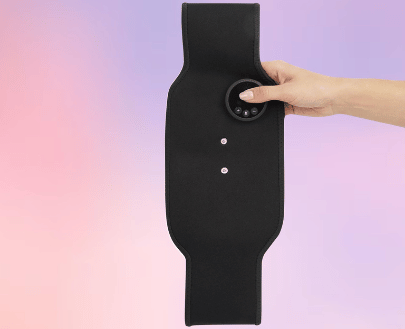
When I looked for a device to use at home, most fell into two buckets:
❌ Cheap “Amazon Pads”
Sticky gel pads that slip off
Uneven stimulation
Weak pulses that feel like vibration instead of activation
Pads wear out fast
These don’t activate core muscles, they just buzz.
❌ Medical‑Grade Rehab Units
Effective but cost thousands
Used in clinics
Not realistic for everyday use
I wanted something in between, not junky cheap, not insanely expensive.
So I asked my PT what she would recommend.
Here’s what she said to look for:
How to Know If an EMS Device Will Actually Work Or Not...
✅ No replacement pads or gels:
If it requires refills, that’s a sign of cheap engineering and ongoing cost.
✅ Multiple pads (4+) for coverage:
More pads = better stimulation across the whole abdominal region.
✅ Belt design:
This keeps stimulation consistent, comfortable, and effective (versus tiny pad stick‑ons).
If a device uses gel pads stuck on your skin, avoid it.
They slip off, snag on hairs, and usually feel uncomfortable.
My PT's Recommendation...
She pointed me to a company called ApeBorn Fitness, and their EMS belt:
The Next Gen Ultra Stimulator
FDA‑approved
No replacement pads required
Covers the entire abdomen
Comfortable belt design
60‑day risk‑free trial
After all the research I did, this was a no‑brainer for me.
Nothing else offered this balance of quality, convenience, and real activation.
And after 60 days of consistent use, I knew it worked, not just because my stomach shrunk, but because I felt like my body belonged to me again.
If You’re Still Reading…
If you’re here, you might be thinking:
“That’s me. I want to feel my abs again.”
I get it.
I just wanted to stop feeling like I was living inside someone else’s body.
I wanted to stop second‑guessing every movement.
I wanted to stop the emotional ups and downs that depended on whether my body cooperated that day.
But what surprised me most about EMS wasn’t just the physical change…
It was how my confidence returned once my body stopped feeling unpredictable.
Once I wasn’t bracing.
Once I wasn’t constantly aware of my stomach or back.
Once everyday movements stopped feeling like a risk.
I didn’t feel like a stranger in my body anymore.
I felt present again.
Capable again.
Like myself again.
And for me, that was enough to say:
Yes, EMS was worth it.
Ready to Try EMS Risk‑Free?

Questions?
Email: info@apebornfitness.com
Copyright © 2026, Apebornfitness.
Advertisement & Health Disclaimer: This EMS device is intended for general fitness and muscle stimulation only. It is not a medical device and is not intended to diagnose, treat, cure, or prevent any medical condition. Individual results may vary. Consult a healthcare professional before use.